Skip to content
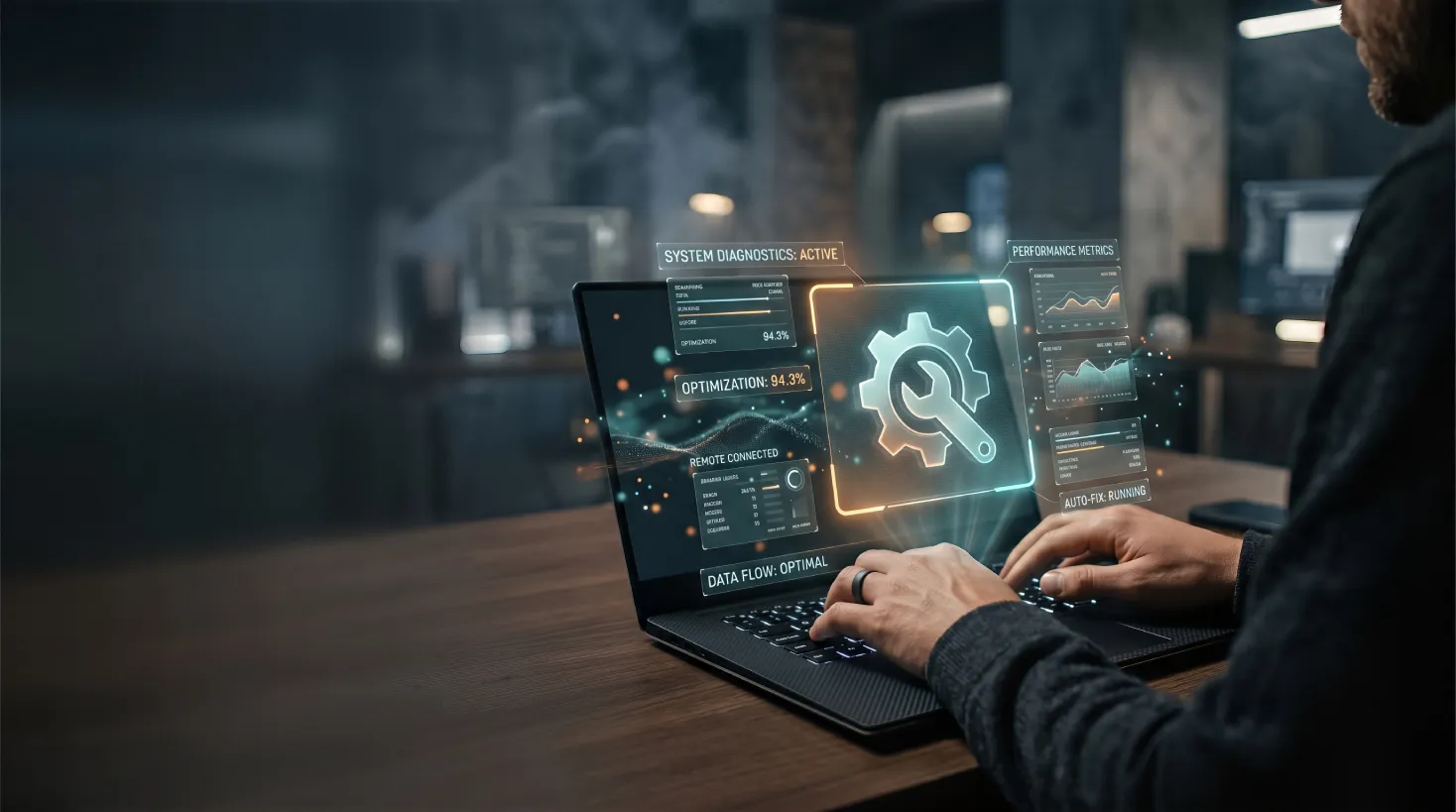
Remote work is no longer a temporary arrangement or a pandemic-era experiment. It is an operational reality for small and medium-sized businesses across the Phoenix Metro area, and the IT infrastructure that supports it is now as business-critical as any physical asset in your building. For Phoenix SMBs competing in one of the fastest-growing commercial markets in the country, the difference between a remote work environment that accelerates productivity and one that drains it almost entirely comes down to how well the underlying technology architecture is designed, secured, and managed. Getting this right is not optional. It is the foundation every distributed team stands on.
Many Phoenix Metro SMBs built their remote work IT infrastructure reactively, resulting in fragmented systems, security gaps, inconsistent user experiences, and rising support costs. Managed IT services address these challenges by providing enterprise-grade remote work infrastructure at a predictable cost, eliminating the need for an internal IT department.
The Core Components of Remote Work IT Infrastructure
A reliable and secure remote work environment for Phoenix SMBs requires a layered architecture of interconnected components. IT infrastructure services typically address six foundational layers to ensure seamless operation.
Secure Remote Access
Zero Trust Network Access (ZTNA) has become the standard for secure remote access, replacing traditional VPNs in modern SMB environments. Unlike VPNs, which provide broad network access, ZTNA verifies identity and device health for each request and grants only the necessary access. This approach significantly limits the impact of compromised credentials or devices, which are common entry points for ransomware and data breaches targeting Phoenix SMBs.
For businesses using legacy VPN infrastructure, transitioning to ZTNA offers significant returns. A compromised VPN credential allows attackers broad network access, while a compromised ZTNA session is limited to specific resources, reducing potential damage and enabling faster recovery.
Cloud Platforms and Management
Cloud-based platforms are the backbone of remote work productivity for Phoenix SMBs. Microsoft 365 and Google Workspace provide the collaboration, communication, and file management tools that distributed teams depend on daily. But deploying these platforms without proper configuration, license management, and security hardening creates significant exposure. Over 95% of new digital workloads are now deployed on cloud-native platforms, yet misconfigured cloud environments remain one of the leading causes of data exposure for SMBs.
IT infrastructure services for cloud environments should include:
- Tenant security configuration, including conditional access policies and multi-factor authentication enforcement
- Data loss prevention (DLP) policies that prevent sensitive business information from leaving the organization through email, file sharing, or cloud sync
- License optimization reviews that eliminate unused seats and align licensing tiers to actual usage patterns.
- Shadow IT discovery to identify unauthorized cloud applications that employees are using outside of sanctioned platforms.
- Backup of Microsoft 365 and Google Workspace data, since Microsoft and Google explicitly disclaim responsibility for data recovery in their terms of service
Endpoint Management and Security
Each remote worker’s device is a potential security risk. Combining endpoint detection and response (EDR) with mobile device management (MDM) provides IT teams with the visibility and control needed to enforce security policies, detect threats, and respond to incidents across all devices, regardless of location.
For Phoenix SMBs, the practical requirements of endpoint management include:
- Automated patch management that keeps operating systems and applications current without requiring manual intervention from employees
- Device encryption is enforced through MDM policy to protect data at rest on every managed endpoint.
- Conditional access controls that prevent unmanaged or non-compliant devices from accessing business applications
- Remote wipe capability for lost or stolen devices that eliminates data exposure risk
- Application control that restricts what software employees can install, reducing the risk of malware introduced through unauthorized applications
Connectivity and Network Performance
Remote work depends on reliable, high-performance connectivity at every employee location. Most Phoenix-managed IT services providers address connectivity through a combination of business-grade internet procurement guidance, SD-WAN technology for offices with multiple internet connections, and VoIP and UCaaS (Unified Communications as a Service) platforms that consolidate voice, video, chat, and collaboration into a single managed environment.
Connectivity gaps that consistently undermine Phoenix SMB remote work performance include:
- Employees using consumer-grade internet at home without business-grade service guarantees, leading to increased support issues during peak periods.
- Insufficient bandwidth at office locations that support both on-site employees and cloud-hosted applications simultaneously
- VoIP quality degradation from inadequate QoS (Quality of Service) configuration that prioritizes voice traffic appropriately over competing data traffic
- Wi-Fi dead zones in office environments that use consumer-grade access points are inadequate for business-density device environments.
⚡ Remote Work Infrastructure Is Not One Tool — It Is a Stack
Secure remote access, cloud platform management, endpoint security, and reliable connectivity are the four foundational layers of a remote work IT environment that performs and protects. Missing any one layer creates compounding vulnerabilities and productivity drains that grow worse over time. Every Phoenix SMB operating a distributed team needs all four addressed, not just the most visible one.
Cybersecurity for Remote Phoenix SMB Environments
Remote work has fundamentally changed the cybersecurity threat landscape for Phoenix SMBs. The traditional corporate network perimeter is no longer relevant when employees work from various locations. IT infrastructure security must now assume every connection is untrusted and authenticate each accordingly.
The specific cybersecurity risks that remote work amplifies for Phoenix SMBs:
- Phishing and business email compromise (BEC) remain the leading initial access vectors, with remote workers less likely to verify unusual requests in person and more likely to act on fraudulent email instructions.
- Credential theft via phishing, password reuse, and unsecured Wi-Fi is the most common path to unauthorized access. Enforcing MFA across all business applications is the most effective countermeasure.
- Unpatched home network equipment, including consumer routers and modems that employees use without IT oversight, creates security gaps that are invisible to IT infrastructure services teams without dedicated home network security programs.
- Shadow IT increases as remote employees use unauthorized cloud tools, creating data residency and compliance risks beyond the visibility of managed IT environments.
- Insider risk rises as remote work reduces natural oversight, making data access logging, DLP controls, and behavioral analytics increasingly important.
Security controls that Phoenix managed IT services providers should deliver for remote work environments:
- MFA enforcement across all cloud applications, VPN or ZTNA connections, and privileged accounts
- Security awareness training is delivered monthly or quarterly, covering phishing recognition, password hygiene, and incident reporting procedures.
- DNS filtering that blocks malicious domains at the network level before threats reach the endpoint
- SIEM (Security Information and Event Management) or managed SOC capability that correlates security events across the distributed environment and identifies threats before they escalate
- Cyber insurance readiness support, including documentation of security controls that insurers require for policy issuance and claim processing
Cybersecurity insurance is now a business requirement for many Phoenix SMBs. Insurers require documented evidence of MFA, patch compliance, immutable backups, and incident response planning before issuing or renewing policies. A knowledgeable managed IT services provider builds both the necessary security posture and supporting documentation.
⚡ The Perimeter Is Gone — Zero Trust Is the New Standard
When employees work from everywhere, every connection is potentially hostile. MFA enforcement, ZTNA, endpoint protection, and security awareness training are not optional for Phoenix SMBs with distributed teams. They are the minimum viable security posture for a remote work environment that faces the same threat landscape as an enterprise with a fraction of the security resources.
Building a Resilient Remote Work IT Strategy for Phoenix SMBs
Resilience, meaning the ability to withstand disruption, recover quickly, and maintain continuity without extended downtime, has become the primary measure of remote work IT infrastructure maturity for Phoenix Metro SMBs. Reactive IT management that fixes problems after they affect employees is no longer a viable operational model. The standard that IT infrastructure services providers are held to in the current environment is prevention and rapid recovery, not just resolution.
The key elements of a resilient remote work IT strategy:
Business Continuity and Disaster Recovery
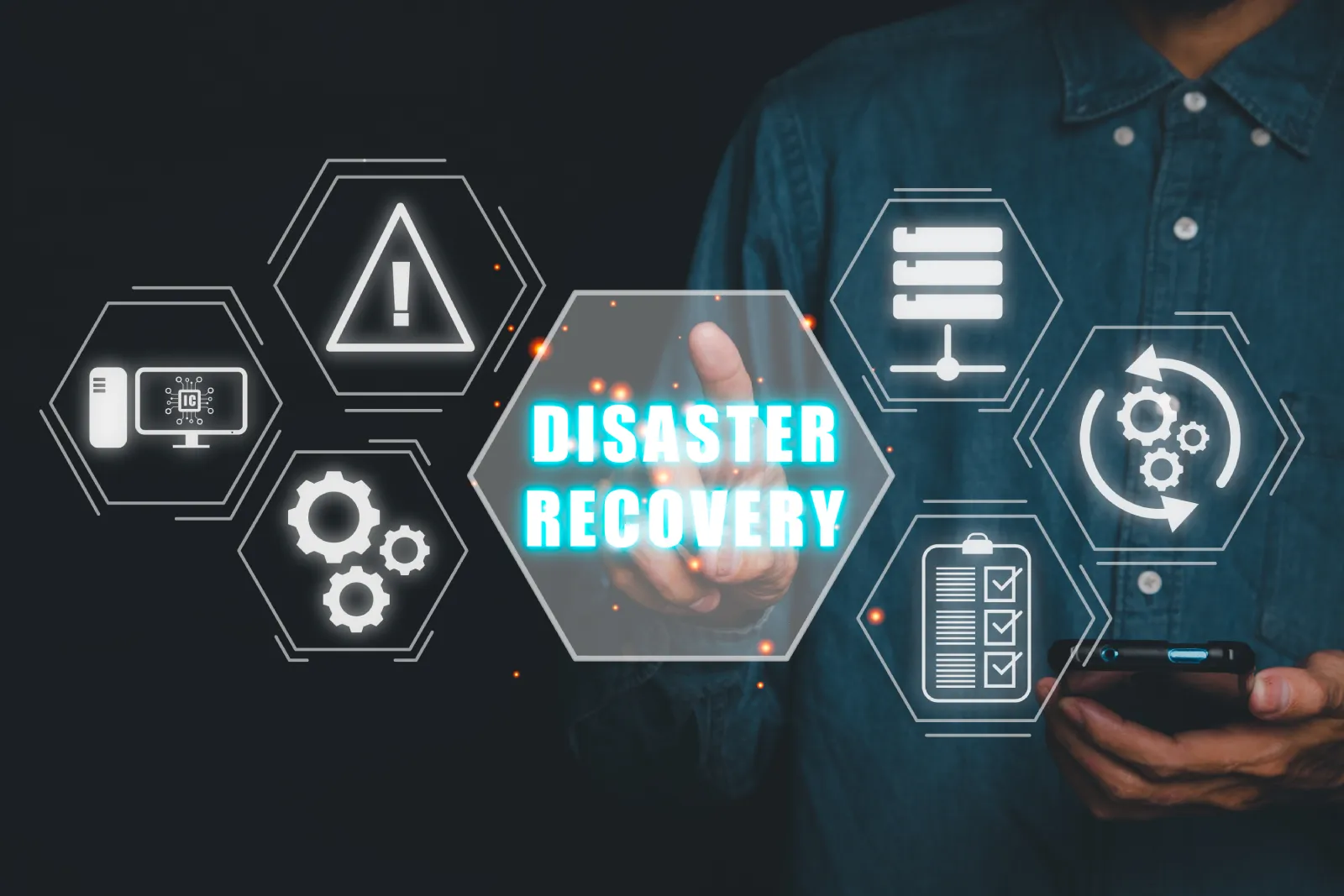
Backup and disaster recovery (BDR) for remote work environments must account for data spread across on-premise servers, cloud platforms, employee endpoints, and SaaS applications simultaneously. A BDR strategy that covers the file server but ignores Microsoft 365, Salesforce, and employee device data leaves most of the organization’s operational data unprotected.
BDR requirements for Phoenix SMB remote work environments include:
- Daily automated backup of all on-premise and cloud-hosted data with tested recovery procedures
- Immutable backup copies are stored in geographically separate cloud infrastructure to protect against ransomware that targets backup systems.
- Defined RTO (Recovery Time Objective) and RPO (Recovery Point Objective) targets that reflect the business impact of downtime.
- Quarterly recovery testing to verify that backup systems work before they are needed under crisis conditions
Proactive Monitoring and Automated Remediation
RMM (Remote Monitoring and Management) platforms provide Phoenix managed IT services providers with continuous visibility into the health, performance, and security of all managed devices and systems. Modern RMM platforms use AI-powered analytics and automated remediation to resolve the most common endpoint issues without generating support tickets or requiring manual intervention.
For Phoenix SMBs, proactive monitoring delivers the most direct financial return of any IT infrastructure investment through:
- Reduced help desk ticket volume as self-healing automation addresses issues before employees notice them.
- Faster mean time to resolution (MTTR) for issues that do require human response, since monitoring platforms provide technicians with full diagnostic context before they begin work
- Predictive hardware failure detection that enables planned replacement of failing components before they cause unplanned downtime
⚡ Resilience is the New Benchmark
Phoenix SMBs that treat IT infrastructure as a strategic investment rather than a reactive expense consistently outperform those that do not — fewer incidents, faster recovery, lower total IT cost, and a remote work environment that enables growth rather than limiting it. Proactive monitoring and tested BDR make the difference.
Phoenix-Specific Considerations for Remote Work IT Infrastructure
The Phoenix Metro operating environment creates specific IT infrastructure challenges and opportunities that generic remote work IT guides do not address. Understanding these local factors helps Phoenix SMBs make more informed decisions and have better conversations with managed IT providers.
Heat and hardware reliability: Arizona’s extreme summer temperatures accelerate hardware failure in server rooms, network closets, and employee home offices without adequate climate control. IT infrastructure services for Phoenix environments should account for a higher hardware replacement cycle frequency and include temperature monitoring for on-premise equipment.
Rapid workforce growth and hiring velocity: Phoenix’s booming economy creates a continuous need to onboard new remote employees quickly. A mature IT infrastructure environment with standardized device provisioning, automated onboarding workflows, and pre-configured security policies can reduce new employee IT onboarding from days to hours.
Industry compliance requirements: Phoenix’s concentration of healthcare, finance, legal services, and government contractors means that a significant percentage of local SMBs operate under HIPAA, PCI-DSS, FedRAMP, or other regulatory compliance frameworks that impose specific remote work security requirements. Phoenix managed IT services providers with compliance expertise map remote work security controls to applicable frameworks, reducing audit preparation burden and regulatory exposure.
Talent market competition: Phoenix SMBs compete for talent with major technology employers, including Intel, TSMC, Amazon, and a growing roster of fintech and healthcare technology companies. A well-designed, reliable, and modern remote work technology environment is a recruiting and retention asset that affects talent acquisition as directly as compensation and benefits.
⚡ Phoenix Is Not a Generic Market – Your IT Infrastructure Should Reflect That
Heat, rapid growth, compliance requirements, and intense talent competition are Phoenix-specific factors that shape what a genuinely effective remote work IT strategy looks like for local SMBs. A provider who understands the Phoenix market delivers meaningfully better outcomes than one applying a national template to a local problem.
Frequently Asked Questions About Remote Work IT Infrastructure for Phoenix SMBs
A comprehensive technology assessment is the most productive starting point. Before investing in new tools or platforms, understanding what you currently have, where the security gaps are, and what is preventing optimal remote work performance gives you and your IT partner a clear, prioritized roadmap. A qualified IT infrastructure services provider should offer this assessment as part of the engagement process.
A VPN grants remote users broad network access as though they were on-site, creating a large attack surface if credentials are compromised. ZTNA verifies identity and device health on every access request and grants only the minimum access needed for the specific resource requested. For Phoenix SMBs with sensitive data or compliance requirements, ZTNA delivers substantially stronger security with a better user experience than legacy VPN architecture.
Break-fix IT support responds to problems after they occur and charges per incident. Phoenix managed IT services providers monitor systems proactively, apply patches and updates automatically, enforce security policies across all devices, and resolve the majority of issues before employees notice them. The managed model delivers more reliable remote work performance, lower total IT cost, and predictable monthly billing compared to reactive break-fix support.
No. Microsoft’s service agreement explicitly states that Microsoft is not responsible for data loss in Microsoft 365. The platform provides high availability, meaning it is rarely unavailable, but it does not provide point-in-time backup or recovery from user error, accidental deletion, or ransomware encryption of cloud data. Third-party backup of Microsoft 365 data is a non-negotiable component of any complete IT infrastructure strategy for Phoenix SMBs.
Conclusion
Remote work IT infrastructure is a strategic investment for Phoenix Metro SMBs. Secure remote access, cloud platform management, endpoint security, and proactive monitoring create a productive, secure, and scalable distributed work environment. Local factors such as extreme heat, rapid growth, talent competition, and compliance requirements make a knowledgeable local IT partner more valuable than a national provider using generic solutions. Phoenix SMBs that invest strategically in remote work IT infrastructure today are building the foundation for future competitiveness.
Black Box Consulting: Phoenix’s Remote Work IT Infrastructure Partner
At Black Box Consulting, we design, implement, and manage remote work IT infrastructure for Phoenix Metro SMBs seeking enterprise-grade technology without the enterprise overhead. Our local team delivers managed IT services tailored to the unique needs of Phoenix businesses. We do not use national templates; instead, we develop technology strategies based on your business, industry, and the specific demands of the Phoenix Metro market.
Black Box Consulting
Schedule Your Free Remote Work IT Infrastructure Assessment
Contact us for a no-obligation technology assessment and let our local experts design a remote work IT environment that protects your business and powers your team, wherever they work.