
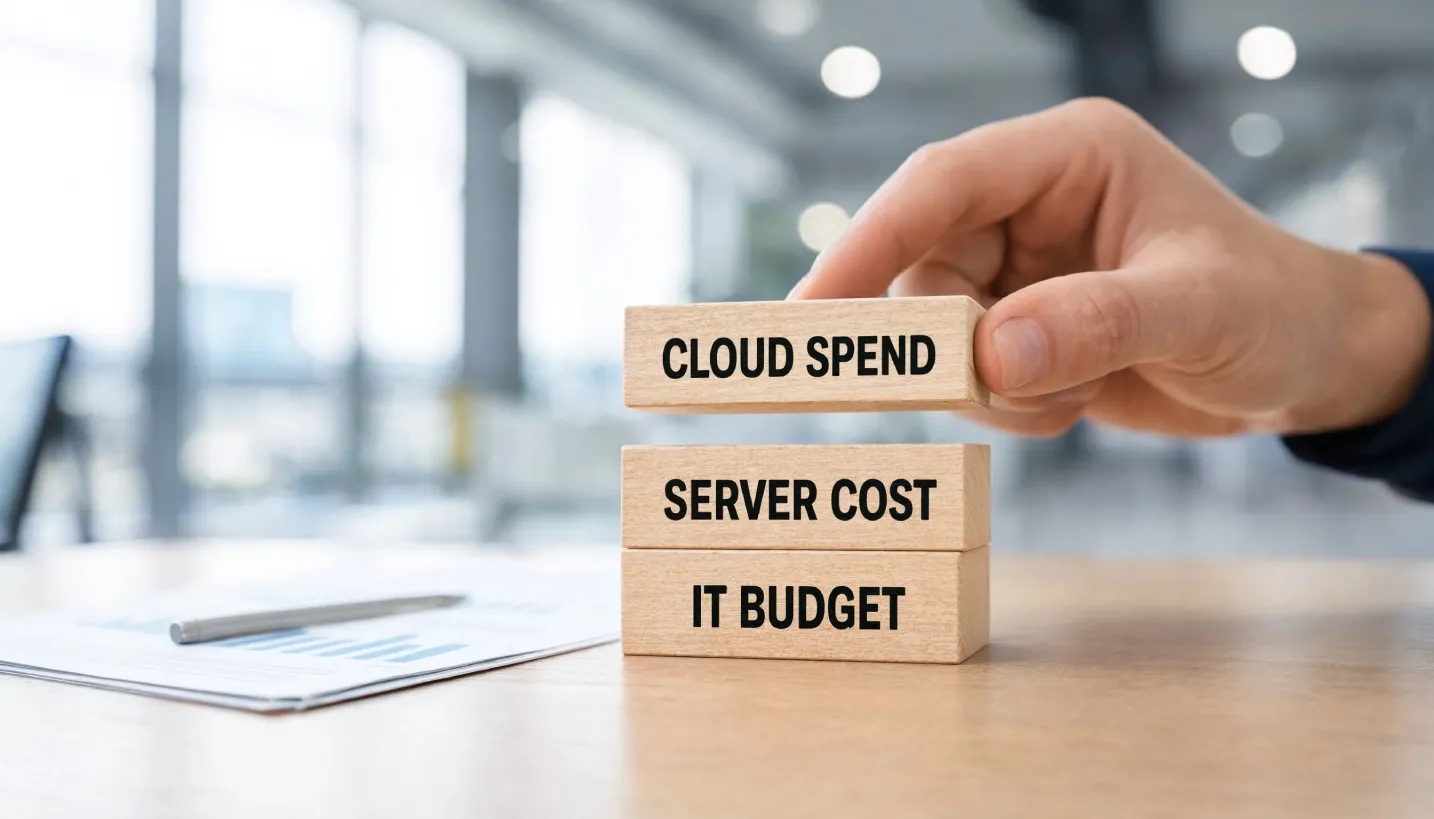
With 2027 planning underway, most small business IT budgets are about to be built the same way they always are: take last year’s number, adjust it slightly, and move on. This approach is easy, and it is almost always wrong. It treats IT as a fixed cost to be minimized rather than a strategic investment to be optimized against real business risk.
At Black Box Consulting, we help clients build IT budget planning that reflect what their business needs to operate securely and reliably. This post lays out a practical framework you can use for your 2027 budget whether or not you ever work with us.
Why the Default Approach Fails
Budgeting IT based on last year’s spending assumes that last year’s spending was correct and that nothing has changed. Neither assumption holds. Your business has grown or shifted. The threat landscape has evolved. Hardware has aged another year closer to failure. Software has reached or approached end of life. The budget that was adequate in 2026 may leave you dangerously exposed in 2027.
Worse, the default approach provides no way to evaluate whether you are spending too little, too much, or in the wrong places. It is a number disconnected from any assessment of what the business actually requires.
A Risk-Based IT Budget Planning Framework for 2027
A better approach starts with your business risk and works backward to the budget required to manage it appropriately. This framework has four components.
Component 1: Foundation Costs
These are the non-negotiable costs of operating securely: endpoint protection, backup systems, patch management, monitoring, and core infrastructure. These are not the place to economize, because failures here threaten the entire business. Budget for these first and fully.
Component 2: Lifecycle Replacement
Hardware and software have predictable lifespans. A risk-based budget plans for replacement before equipment fails rather than treating every replacement as an unplanned emergency. Map the age of your current hardware, identify what will need replacement during 2027, and allocate accordingly. This single practice eliminates the most common source of IT budget surprises.
Component 3: Risk-Proportionate Security
The appropriate security investment depends on your specific risk profile. A business handling sensitive client data in a regulated industry needs more security investment than a business with minimal data sensitivity. Assess your actual risk: what data do you hold, what would a breach cost you, what compliance requirements apply, and budget security investment proportionate to that risk.
Component 4: Strategic Improvement
Beyond maintaining the status quo, a forward-looking budget includes investment in improvements that advance the business: a cloud migration that improves reliability and reduces long-term cost, new tools that improve productivity, or infrastructure upgrades that support growth. This is the component most likely to be cut, and cutting it consistently is how businesses fall behind.
The Hidden Cost the Default Budget Ignores
The most important number in IT budgeting is one that rarely appears in the budget: the cost of the incidents you are trying to prevent. A budget that saves money by underinvesting in security or reliability is not actually saving money if it results in a breach, extended downtime, or data loss that costs far more than the savings.
When we help clients build a budget, we factor in this risk-adjusted cost. An investment that reduces the probability of a costly incident is not an expense. It is risk mitigation with a measurable return. Framing the budget this way often reveals that the business has been underinvesting in exactly the areas that matter most.
Predictability as a Budgeting Goal
One of the underappreciated benefits of a well-structured IT budget planning is predictability. The break-fix model produces wildly unpredictable IT costs: cheap in quiet periods, devastating when something major fails. A managed services model with planned lifecycle replacement converts IT into a predictable operating expense that you can budget confidently across all twelve months of 2027.
For most small businesses, this predictability is worth a great deal independent of the total cost. It allows for confident financial planning, eliminates the stress of unexpected IT emergencies, and makes IT a stable, manageable line item rather than a source of anxiety.
Common Budgeting Mistakes to Avoid
As you build your 2027 budget, a few common mistakes are worth avoiding. The first is treating IT as a single line item to be minimized rather than a set of distinct investments to be optimized. Lumping everything together obscures the fact that some IT spending is non-negotiable foundation while other spending is discretionary improvement, and the two should be evaluated differently.
The second mistake is deferring lifecycle replacement to save money in the current year. This feels prudent but simply pushes the cost into a future year while increasing the risk of an unplanned failure in the meantime. Aging hardware does not become cheaper to replace by waiting; it becomes more likely to fail at the worst possible moment. Planned replacement is almost always cheaper than emergency replacement, even before accounting for the downtime an unplanned failure causes.
The third mistake is underinvesting in security to hit a target number, then discovering after an incident that the savings were illusory. Security is the area where the gap between what a budget shows and what a business actually risks is widest. A budget that looks lean because it skimps on security is not lean; it is simply hiding risk that will surface later, usually at a far higher cost than the savings.
Building Your 2027 IT Budget
As you plan your IT budget for the year ahead, resist the temptation to simply adjust last year’s number. Start with an honest assessment of your risk, map your foundation costs and lifecycle needs, allocate security proportionate to your actual exposure, and include investment in improvements that move the business forward. Doing this work in Q4, before the new fiscal year begins, gives you time to adjust before spending decisions are locked in.