If your business is dealing with slow networks, unexpected outages, or a growing list of IT problems your team can’t handle, you’re not alone. Arizona businesses facing rapid growth, remote teams, and new cybersecurity threats need reliable IT infrastructure management services that aren’t a luxury — they’re the backbone of daily operations. Whether you’re a small business in Tucson without an IT department or a mid-sized company in Phoenix that’s outgrown its current setup, choosing the right managed IT partner can turn technology from a roadblock into a driver for your business.
This guide is for business owners and decision-makers who are done putting out fires and ready to take a smarter, more proactive approach to their IT. Inside, you’ll find a clear breakdown of what IT infrastructure management actually covers, how it benefits Arizona SMBs, what cybersecurity and cloud integration look like in practice, and which compliance requirements matter for your industry. By the end, you’ll have the knowledge to make a confident, informed decision for your organization.
What IT Infrastructure Management Services Actually Include
Many business owners think IT management is just about calling someone when the internet stops working. In fact, it involves a wide range of ongoing tasks that keep your entire technology running smoothly, securely, and in line with your business goals.
Your IT infrastructure is like the nervous system of your business. It covers everything your team uses each day: internet, servers, devices, software, data storage, and the network connecting it all. IT infrastructure management means keeping all these parts working well, all the time, and fixing issues before they become bigger problems.
Here’s what a comprehensive IT infra management service typically delivers:
- Network management — monitoring and maintaining your internet, Wi-Fi, switches, and internal connections for speed, reliability, and security
- Server management — keeping on-site or cloud-hosted servers updated, patched, and performing at full capacity
- End-user device management — overseeing laptops, desktops, mobile devices, and printers across your entire team
- Help desk support — a dedicated team available to troubleshoot issues for your staff, often 24/7, with guaranteed response times
- Data backup and disaster recovery — ensuring your critical business data is protected and can be restored quickly if something goes wrong
- Cloud infrastructure management — overseeing cloud platforms like Microsoft 365, Azure, or Google Workspace
Think of it as having a full IT department permanently on call — without the overhead of hiring one in-house. For most Arizona businesses, that’s not just convenient — it’s a genuine competitive advantage.
🔑 “More Than Break-Fix”
IT infra management isn’t emergency support — it’s a continuous, multi-layered service that keeps every part of your technology ecosystem healthy. If your current IT approach is mostly reactive, you’re already behind.
How Managed IT Services Benefit Arizona SMBs
Here’s a question worth sitting with: How much does your business lose every hour your systems are down? For most Arizona small and mid-sized businesses, the answer is significant — lost productivity, missed sales, and frustrated customers who don’t wait around.
Proactive IT management flips the script. Instead of waiting for problems to surface, a managed IT provider monitors your systems around the clock, catching issues before they cause disruption. It’s the difference between a tire blowout on the I-10 and a routine rotation at the shop — one costs you a full afternoon, the other costs you an hour.
Beyond uptime, here are the practical benefits Arizona businesses consistently report after moving to a fully managed IT infrastructure model:
- Fewer surprise outages — proactive monitoring catches 80–90% of issues before end users ever notice them.
- A more focused workforce — employees stop troubleshooting their own tech and get back to the work they were actually hired to do
- Scalability without the hiring cycle — as your headcount or locations grow, your IT environment scales with you through your provider, not through a new round of recruiting
- Enterprise-level expertise on an SMB budget — access to specialists in networking, security, and cloud infrastructure without paying full-time salaries for each discipline
- Predictable operations — with a managed service in place, technology becomes a stable foundation rather than a source of constant uncertainty.
For businesses in high-growth corridors like Scottsdale, Gilbert, or Chandler, this flexibility and stability are extremely valuable. The goal of good IT management is not just to keep things running, but to make technology a real asset for your business.
🔑 “Work Smarter, Not Harder”
Managed IT removes the burden of technology from your team and replaces it with consistent, expert-level support. The result: fewer disruptions, faster growth, and a lot less stress on everyone in the building.
Cybersecurity: The Non-Negotiable Layer of IT Infrastructure Management
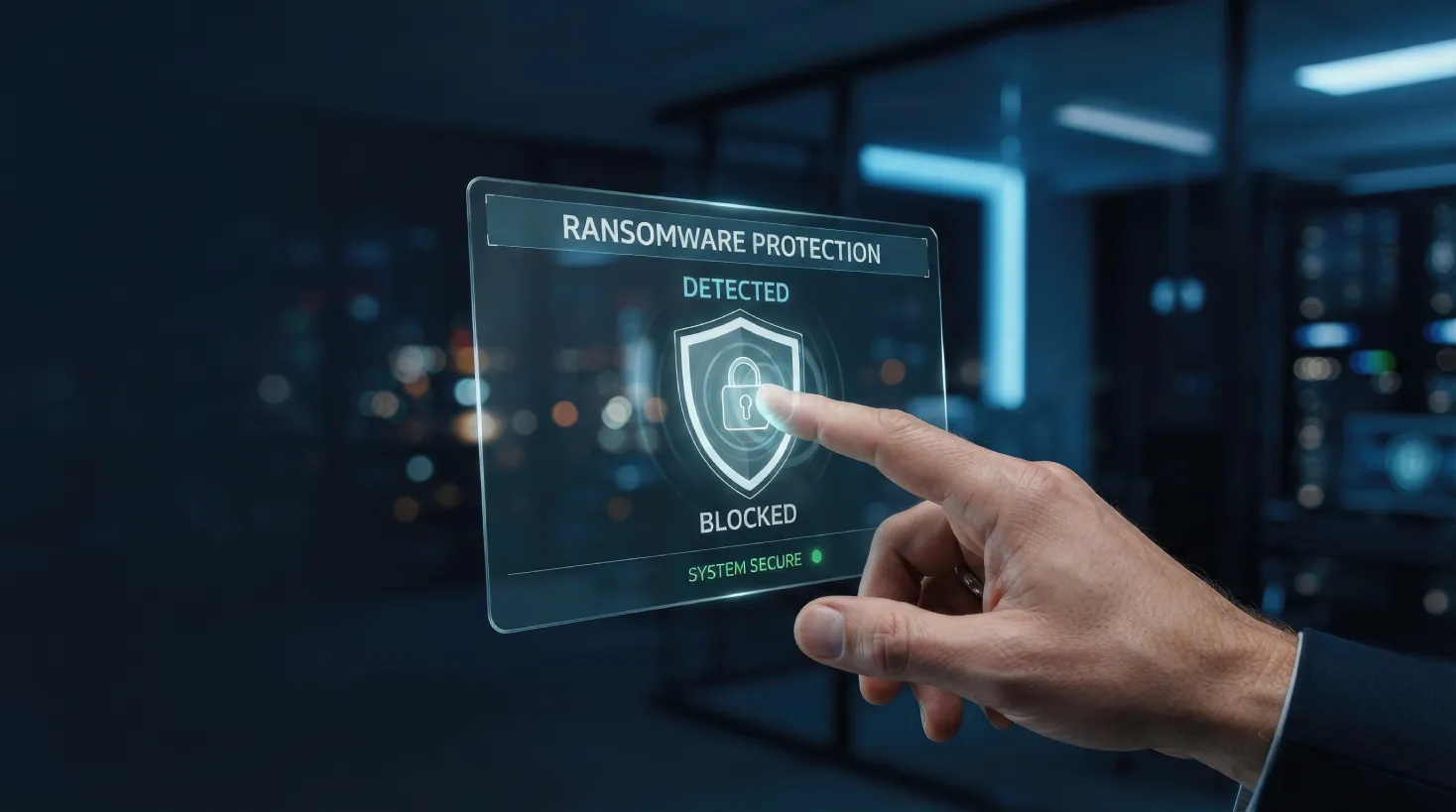
Cybersecurity isn’t a separate conversation from IT management — it’s baked into every layer of it. Arizona businesses have seen a sharp rise in ransomware attacks, business email compromise (BEC) scams, and data breaches in recent years. And here’s the uncomfortable truth: cybercriminals increasingly target small and mid-sized businesses precisely because their defenses tend to be weaker than those of large enterprises.
A strong IT infrastructure management provider integrates multiple layers of security as part of their standard service — not as an expensive add-on. Here’s what that looks like in practice:
- Firewall and network security management — controlling what traffic enters and exits your network, and flagging anything unusual
- Endpoint detection and response (EDR) — identifying and containing threats on individual devices before they spread across your network
- Multi-factor authentication (MFA) enforcement — adding a critical second layer of identity verification across all user accounts
- Patch management — automatically applying software and firmware updates to close known security vulnerabilities before attackers can exploit them.
- Security Operations Center (SOC) monitoring — real-time, 24/7 threat detection and response by trained security analysts
- Phishing simulation and staff awareness training — because human error remains the leading cause of security breaches
One of the most practical and often overlooked parts is having a tested disaster recovery plan. It’s not enough to just back up your data; you need to make sure those backups can be restored quickly when needed. A good IT management partner will run these tests for you, so you never find out your backup failed when it’s too late.
🔑 “Security Is Not Optional”
Cyber threats are real, growing, and increasingly aimed at businesses just like yours. Expect security to be a core, integrated component of any quality IT infrastructure management service — not a line item you negotiate away.

Cloud Integration and IT Infrastructure Management for Arizona Businesses
The cloud has fundamentally changed how Arizona businesses store data, work together, and serve customers. IT infrastructure management has changed along with it. Whether your team is in one Phoenix office or spread across Arizona, the cloud gives you flexibility that traditional setups can’t offer.
But “moving to the cloud” isn’t a single decision — it’s a spectrum. Here are the three most common paths Arizona businesses take, and when each one makes sense:
- Full cloud migration — moving everything (servers, storage, applications) to a provider like Microsoft Azure or Amazon Web Services. Best for businesses that want to eliminate on-site hardware entirely and prioritize flexibility and remote access.
- Hybrid cloud setup — keeping some infrastructure on-site while shifting other functions to the cloud. Ideal for businesses that need local control over sensitive data while still benefiting from cloud scalability. Many Arizona healthcare and legal firms take this route.
- SaaS environment management — managing a stack of cloud-based applications (Microsoft 365, Salesforce, QuickBooks Online, etc.) as part of the broader IT environment. This is where most SMBs already are, whether they realize it or not.
A capable IT management team doesn’t just migrate you and walk away. They handle ongoing cloud environment management — monitoring performance, controlling user access, managing licensing, and ensuring your cloud tools are actually configured securely. Many businesses are surprised to discover that a misconfigured Microsoft 365 environment is one of the most common entry points for data breaches.
The bottom line: the cloud is powerful, but only when it’s managed properly. Your IT infrastructure management provider should treat your cloud environment with the same rigor they apply to your physical network.
🔑 “Cloud Without the Confusion”
Cloud integration isn’t a one-time project — it’s an ongoing management responsibility. The right IT management partner helps Arizona businesses choose the right cloud model, migrate safely, and keep that environment secure and optimized long-term.
Compliance and IT Infrastructure: What AZ Businesses Need to Know
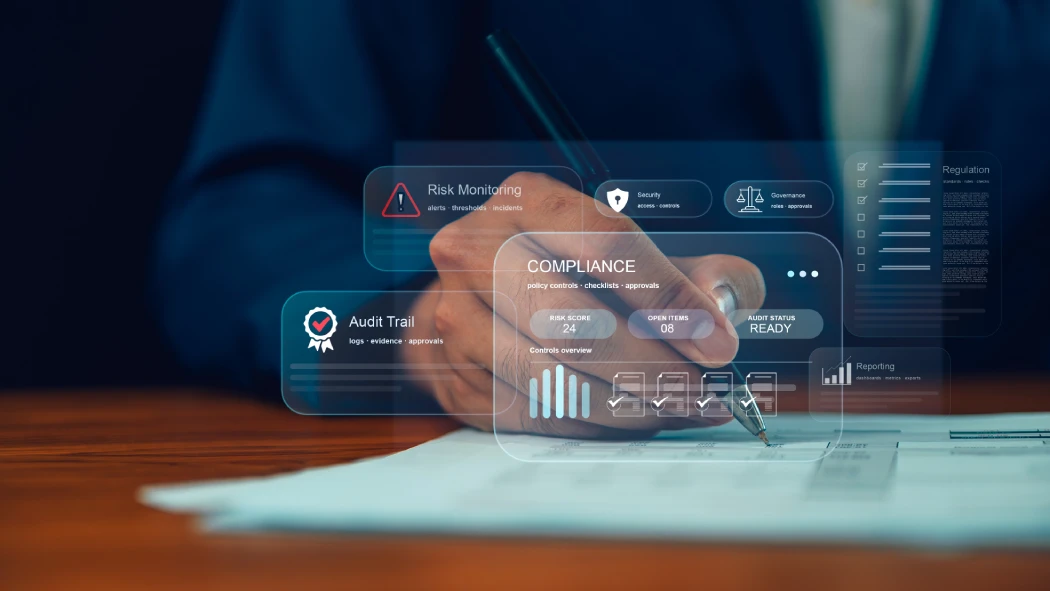
Depending on your industry, your IT infrastructure isn’t just a business tool — it’s a regulatory requirement. Compliance frameworks dictate how you store, protect, transmit, and audit access to sensitive data. Falling short isn’t just an IT problem; it’s a legal and financial liability.
Here are the compliance standards most commonly relevant to Arizona businesses:
- HIPAA — mandatory for healthcare providers, dental practices, behavioral health organizations, and any business that handles protected health information (PHI). Non-compliance penalties can reach into the millions.
- PCI-DSS — applies to any business that accepts, processes, or stores credit card payments. This includes retail, hospitality, and e-commerce businesses across Arizona.
- SOC 2 — increasingly required by enterprise clients and government contractors as documented proof that a vendor manages customer data securely and responsibly.
- CMMC (Cybersecurity Maturity Model Certification) — relevant for Arizona defense contractors and suppliers working with the Department of Defense.
The practical takeaway here is simple: compliance can’t be bolted on after the fact. It needs to be built into how your IT infrastructure is designed and managed from the ground up. When evaluating an IT management provider in Arizona, ask directly whether they have hands-on experience supporting compliance in your specific industry — and ask for examples.
A provider who has helped a Tucson medical practice stay HIPAA compliant is very different from one who has never worked in a regulated field. The right IT infrastructure management partner sees compliance as an ongoing responsibility, not just a box to check.
🔑 “Stay Compliant, Stay Protected”
Compliance isn’t a one-time audit — it’s a continuous requirement baked into how your IT is managed every day. Choose a provider that knows your industry’s regulatory landscape, not one that has to Google it.
Frequently Asked Questions
Conclusion
Effective IT infrastructure management isn’t about having the fanciest technology — it’s about having the right systems, properly maintained, so your Arizona business can operate without interruption, grow without friction, and stay protected against threats that are only getting more sophisticated. From proactive network monitoring and layered cybersecurity to smart cloud integration and industry-specific compliance, a quality managed IT partner handles the complexity so you can stay focused on running your business.
Ready to stop reacting to IT problems and start getting ahead of them?
The team at Black Box Consulting specializes in IT infrastructure management services built specifically for Arizona businesses. Whether you’re building your IT foundation from scratch, modernizing an aging system, or searching for a more reliable partner than your current provider, they’re ready to assess your environment and build a clear, actionable roadmap. Visit Black Box Consulting today to schedule your free IT infrastructure assessment and take the first step toward technology that truly works for your business.